
Open-cell foam insulation in El Paso TX - quieter rooms and a sealed attic
Hot upstairs rooms, drafts around ceiling lights or street noise coming through? We spray open-cell foam that seals the gaps and quiets the house.
Ask about open-cell foam for your home
We answer (915) 265-1142 from 6 AM to 10 PM on weekdays and 8 AM to 10 PM on weekends, so you can call after work.
Is open-cell spray foam right for your El Paso house?
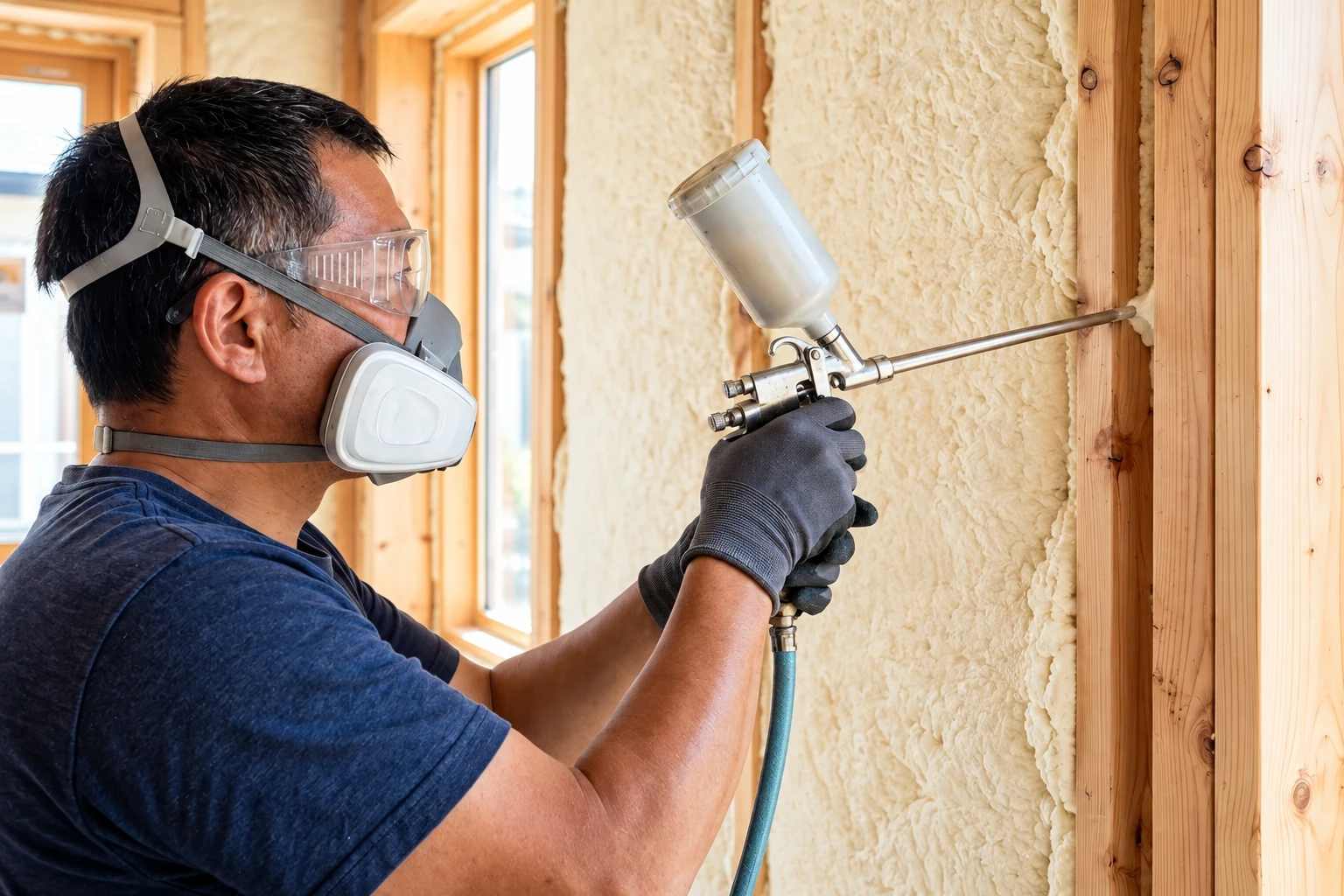
Open-cell foam insulation is a soft spray foam we apply to attic rooflines and walls in El Paso, TX, where it stops air leaks and slows heat at typical thicknesses and quiets the rooms around it. Most jobs need a planning visit, a spray day and a wait while the foam cures before you move back in.
Most people call us because a room runs hot, the power bill keeps climbing or they can hear the street from bed. The price comes down to how much area we cover, how many inches go on, whether old insulation has to come out first and whether a furnace or water heater in the attic has to change. The schedule turns on repairs that have to come first, a permit if your address needs one and a day when everyone can be out of the house. If your house only needs the attic floor topped up, attic insulation may fit better, and your written estimate lists each step so you can see what's driving the number before you decide.
Why El Paso homeowners call Wraptight for spray foam
The owner looks before anyone sprays
I started Wraptight in El Paso in 2023 after learning the trade on a city crew, where every job got checked before sign-off. I write every estimate myself and check our installers' work before we leave.
Repairs come before the foam
If I find a roof leak, bad wiring or an open gap, it gets fixed before foam covers it. I'd rather tell you the job has to wait than bury a problem.
Working both sides of the line
We work across El Paso and the cities around it on both sides of the Texas and New Mexico line, from Socorro to Sunland Park. We're licensed and insured.
On a foam job the order of the work matters most, because foam is hard to undo once it's on. Tell us about your house and I'll set a time to come look.
How we install open-cell foam insulation
Open cell is our pick when you want quieter rooms at a lower cost. I start by going through the attic or the open walls to see what's there and what the foam will cover. If we're turning a vented attic into a sealed one, the old insulation on the attic floor comes out first, because one trade group's guidance calls for that, both for odors left by past birds and rodents and for code. I tell you how many inches we plan so you know what you're getting, and since you'll need to be out of the house while we spray, we set the day around your plans. On that day our crew covers what needs protecting, sprays to the planned depth, trims the foam and cleans up.
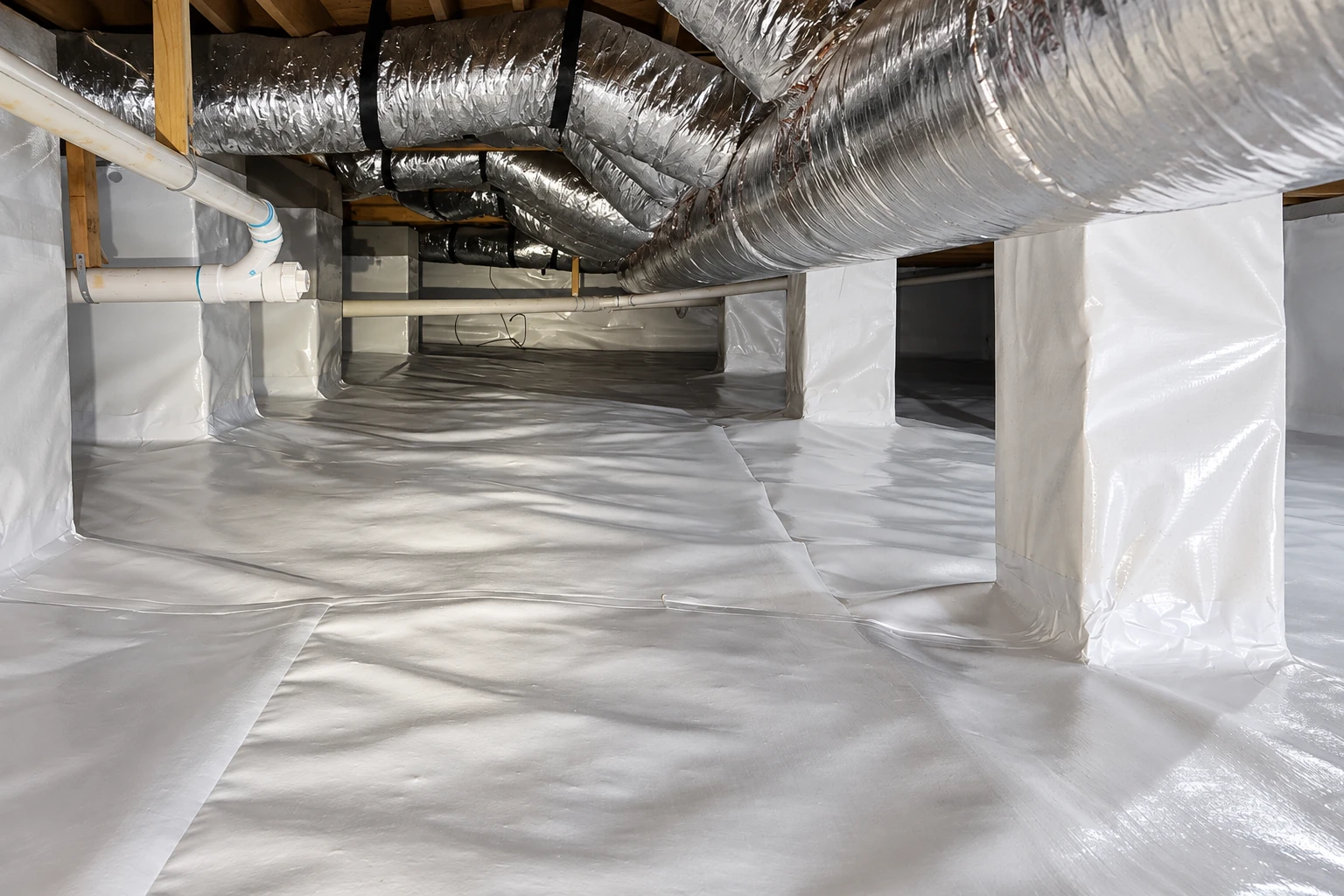
Some jobs reach past the house. We spray the same foam in shops and offices, and our commercial insulation work covers small commercial buildings and the property managers who run them. Open cell lets water vapor pass through, so it isn't the answer for damp ground under a raised floor, which is where a crawl space vapor barrier comes in.
Attic roofline
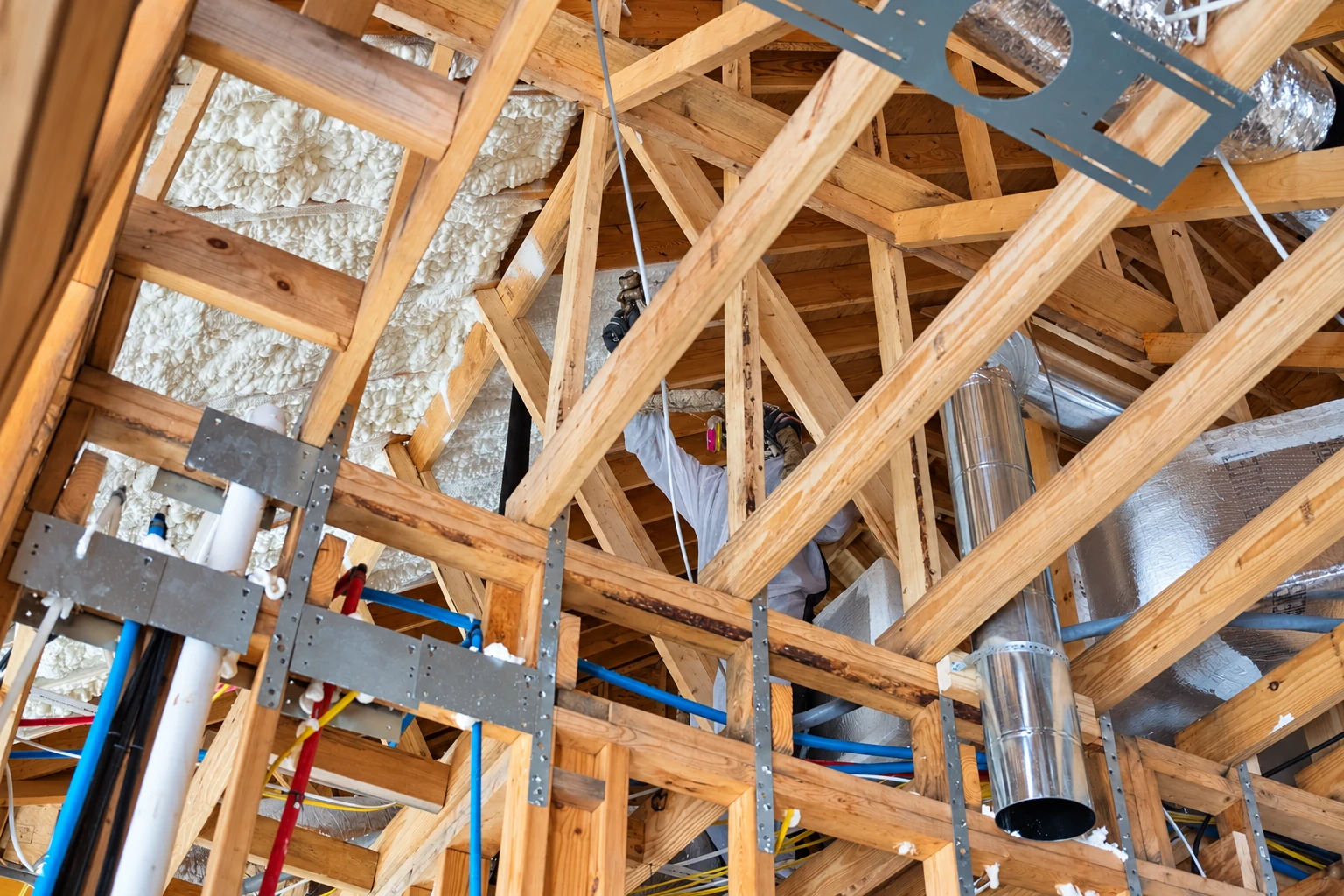
Foam under the roof deck brings the attic inside the house. It suits homes where the ductwork runs through the attic, because the ducts stop sitting in a hot space.
Open walls and rooms over the garage
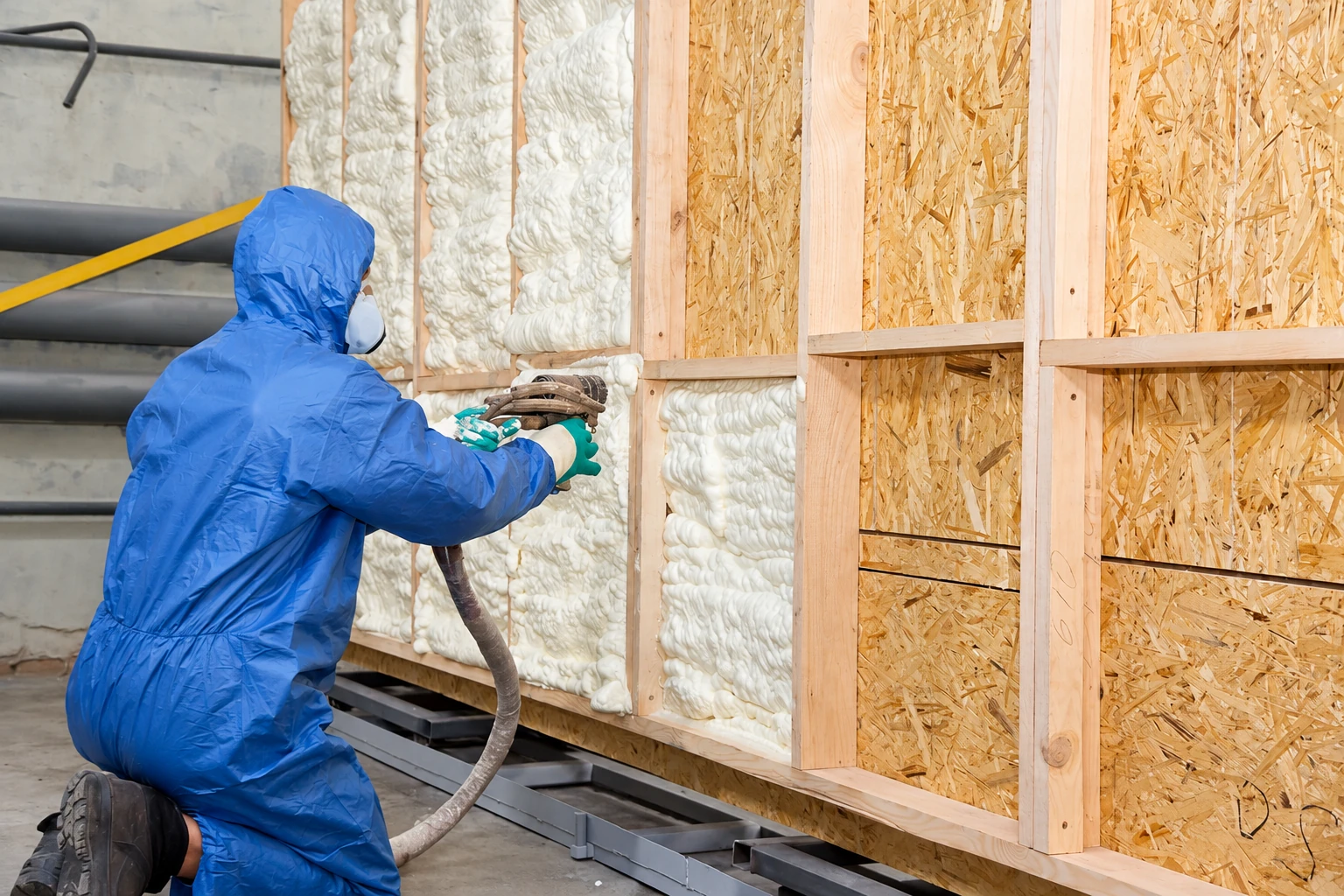
When walls are open for a remodel, or the room over the garage runs hot and loud, open cell fills the cavities. That cuts the noise and the drafts coming through.
Loose fill instead of foam
If your ducts aren't in the attic, sealing the gaps and topping up blown-in insulation usually costs less and does the job. I'll tell you so at the estimate.
How do you know your house could use open-cell foam?
Hot rooms upstairs
Bedrooms upstairs stay hot long after the sun goes down. Heat is usually soaking through the roof into an attic with thin or patchy insulation, and the AC pays for it every month.
Drafts at lights and vents
You feel air moving around ceiling lights, the attic hatch or vent covers. Those are open paths into the attic, and until they're sealed, any insulation you add works against a draft.
Noise through the walls
You hear the TV through the bedroom wall or traffic from the street. Thin or empty wall cavities carry sound easily, and nothing changes until those cavities are filled.
The room over the garage
The room over the garage is the hottest or coldest one in the house. Its floor and walls often have little insulation, so it stays uncomfortable and the bill keeps climbing.
What happens after you call about open-cell foam?
I come out and look
Call (915) 265-1142 or send the form, and I come look at the attic or walls. My written estimate lists each step, including anything that has to be fixed first.
We spray from the list
On spray day our installers work from your written estimate, step by step, so the job matches what you approved. If we find something new, you hear about it before the plan changes.
I walk the work with you
Once the foam has cured and the house is aired out and cleaned, I check the work and walk it with you before we leave.
Open-cell foam questions from El Paso
Here's what people ask most before booking foam work. If your house has something these don't cover, call (915) 265-1142 or send the form and ask about your own attic.
How much does open-cell spray foam insulation cost in El Paso?
Open-cell foam insulation in El Paso usually costs about $1,700 to $2,500 for 1,000 square feet at 3 inches thick. That's the usual market range for that area and depth, so a bigger roofline or a thicker layer costs more, and removing old insulation or changing attic equipment adds to it. Your written estimate lists each of those steps.
Is open-cell or closed-cell spray foam better for my home?
Open cell suits most homes where you want quieter rooms for less money, and closed cell suits spots that need the most heat resistance in a thin space. Closed-cell foam is about twice as energy efficient per inch and costs more, while open cell is a much better sound barrier. I'll tell you at the estimate which one your house calls for and why.
How long do I have to stay out of the house after spray foam insulation?
You stay out until the foam has cured and the house has been aired out and cleaned, which some makers put at 24 hours for professional high-pressure foam. EPA guidance says everyone living there, and any other workers in the house, should leave while the foam goes on. The wait varies by product, so I give you the time for the foam we use when we set the day.
Does spray foaming the attic affect a furnace or water heater up there?
Yes, if the unit draws its air from the attic. One foam maker's guide says that kind of furnace or water heater can't run safely once the attic is sealed, so it needs sealed-combustion or power-vented equipment instead. I look for it at the estimate so any change is in the plan and the budget before we spray.
Do I need a permit for spray foam insulation in El Paso, TX?
I check that for every job, because the rules differ between El Paso, the county areas and the New Mexico cities, and when a permit applies we handle the application and the inspections. Inside the city, permit applications go to the City of El Paso Planning & Inspections department, and homes there follow the home and energy codes the city has adopted. The department warns that scammers are posing as the city and asking for a fake "City Compensation Fee," so check any fee request with the department directly before you pay.
How do I know how thick open-cell foam should be?
Ask your installer for the number of inches, because the depth decides how well the foam stops air and how much heat it holds back. Energy Department guidance says open cell can serve as the air barrier, the layer that stops air leaks, once it's at least 5.5 inches thick, while closed cell does that at 1.5 inches or more.
Get a written plan for your foam
Put your home's size, the areas you want insulated and any furnace or water heater in the attic in the form. We reply within one business day to set a free on-site estimate, with no obligation.
What open-cell foam looks like
Other work that goes with foam
Commercial insulation
Shops, offices and rental buildings with hot rooms or noisy shared walls get the same planned approach, scheduled around the people who use them.
Learn moreCrawl space vapor barrier
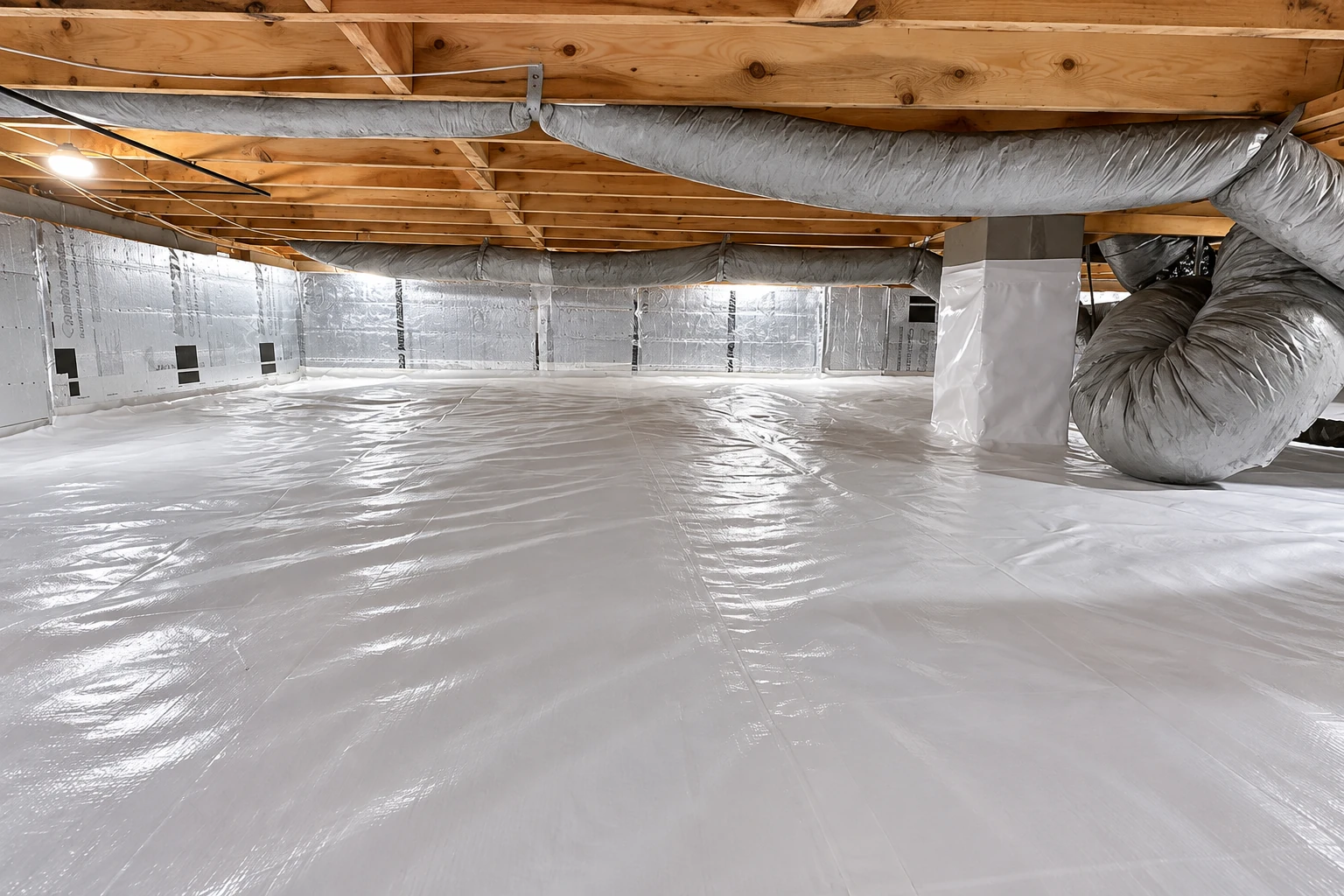
If the ground under a raised floor stays damp, a sheet laid over it helps keep that moisture away from the floor framing and insulation above.
Learn more